




Love and marriage, love and marriage
Go together like a horse and carriage
Dad was told by mother
You can’t have one, you can´t have none
You can’t have one without the other
– Frank Sinatra
In the 1980’s, a group of researchers talked to a WHOLE lot of young people and asked them…
Would you marry a person you weren’t “in love with,” but who had all the qualities you desired in a partner?
Over 80% said : NO
Honoré Fragonard – Les Progrès de l’amour : Le rendez-vous
Another group of researchers found couples who married for love and followed them for 20 years. They expected to find some version of “happily ever after,” barring the stressful child-bearing years. What they found, however, was that over time, each partner’s satisfaction plummeted, and intimacy—ranging from confiding in each other to having sexual intercourse—greatly subsided.
It’s easy to see marriage as the culprit. After all, love was there first. But the opposite turns out to be true: love—at least the “romantic” kind filled with sexual desire fueled by neurobiology—was the greatest contributor to marital unhappiness.
Well, no, but that depends on how you define love. Researchers have recorded 216 unique types of love! The most endearing and enduring kind is compassionate love, defined as
“an attitude toward other(s). . .containing feelings, cognitions, and behaviors that are focused on caring, concern, tenderness, and an orientation toward supporting, helping, and understanding the other(s), particularly when the other(s) is/are perceived to be suffering or in need”
In every working relationship, positive and negative sentiments sit side by side. The predictor that a marriage may be headed for divorce is the absence of any positive feelings, not the presence of negative ones (We aren’t discussing toxic relationships with abusive behaviours or addictions).
François Gérard – Psyche Receiving Cupid’s First Kiss (1798)
They say it’s a 5:1 ratio; for every 5 positive things, there’s a negative. But it’s not just “the thing” or the among of things—it’s how you resolve your feelings about “the thing,” your residual sentiment. Feelings of compassion can be cultivated ♥ over time.
Setting the right expectations about love, navigating complexities in relationships, dealing with heart-break or boredom, the work-love balance and communication skills, needs to happen early-on.
Love is not just an emotion. It’s an attitude and one that will always remain ‘a work in progress.’

At a very young age we are instructed “Don’t make the same mistake twice.” Exclamations of “tch” if our child misspells a word or gets her numbers wrong. As a new businesswoman, in a new job role, in a new relationship or at school, we go to great lengths to be flawless, to get that perfect score. After all, we want us and ours to be the best. We especially do not want to blunder in situations that count. We would prefer that a surgeon performing a life-saving surgery be faultless. Rationally and logically speaking, we are all fallible and will always be inclined to err.
A review conducted at the Department of Psychology, Columbia University gives us beautiful insights into the problems of learning and performance. It emphasizes the importance of make mistakes, being given corrective feedback constructively and teaching children early-on to develop a higher tolerance to receive such feedback.
In a business as a new-comer, if the goal is optimal performance in high-stakes situations, then it is important to take decisions confidently in low stakes situations. If your decision is correct, mazel tov! If the decision is incorrect, corrective feedback that is given – including an analysis of the reasoning leading up to the mistake, optimizes learning – Growth !
Keeping in mind that one must encourage and allow mistakes – it is equally important that the teacher / mentor use this opportunity to exercise exploratory learning strategies rather than rate you – criticize or punish. It is also important to distinguish between making an error and being a mistake. Self-rating of any form is unhealthy. We all perform poorly in some tasks more than others and this does not make us “failures.”
In the classroom situation, a child who gives the correct answer is praised, even awarded a ‘place’ – photographs are taken and posted. Incorrect answers and deviant correct answers are never discussed, and in fact – usually ignored. “The winner takes it all” so to speak. The main purpose that such reinforcement serves in a school setting where errors are not constructively addressed, is to establish authority of say, the teacher, as someone who can confer awards. It is one thing to assert power, and another to be invested in teaching or learning. In businesses, they say that discussing potential errors, or errors that one has made as the mentor, also helps the learning process.
It is not necessary that feedback be immediate for learning to occur. Lab experiments show that even when feedback is given as much as one week later (delayed feedback), it helps get the attention of the learner. In some situations however (such as the classroom) immediate feedback benefits students better. Rather than a “right” or “wrong” – Deep analysis leads to discovery and better retention.
Apart from the obvious facilitation of learning, the emotional consequences of grasping from very early on that – to err is human, and necessary – can eventually mean more resilient humans

Percy Jackson: “A half-blood of the eldest dogs…”
Annabeth : “Er, Percy? That’s gods, not dogs”
– Rick Riordan in The Lightning Thief
When our dear son was 3 years old, I noticed that as kind, creative, and intelligent as he was, he did not gravitate with curiosity towards decoding words written on paper in two dimensions. He liked listening to stories like The Secret Life of Walter Mitty by James Thurber, narrated to him by his grandmother. We read him Roald Dahl’s Charlie and the Chocolate Factory and Rudyard Kipling’s The Jungle Book—the long versions with no pictures. He memorized a lot of it, and was able to point out the differences in the movie version. Whereas he absolutely loved being read to and began using big words rather early on, he resisted the “putting pen to paper” things that other kids his age did with ease. My husband and I have 45 years of formal education between us. We have had a lifelong affair with words and reading. The thought did occur to us, “How could our son have fallen so far from the tree?” More about how the diagnosis happened in later posts. For now :
Written works are meant to function as a means of communication. For them to be effective, we must be able to (1) decode and (2) comprehend text. Dyslexics have difficulties with decoding written matter. Comprehension is not an issue/ Sensory abilities are intact/ Intelligence is intact.

Under the CC license by Brandi-Redd at Unsplash
Nope. The larger category of Learning disabilities under which dyslexia falls, can be of many types. More on that in later posts.
The diagnosis of dyslexia is tricky. Unlike categorical disorders which you can either have or not have, dyslexia lies on a continuum. This continuum is a distribution of age-appropriate word reading ability. Ideally in India, a clinical psychologist with an Mphil degree (an M.A/M.Sc or a Ph.D is not enough) and an Occupational therapist, together, can be trusted to not miss out on a learning disability.

Our son with the Ladybird series
Epidemiological studies have put the number at a very high 7%.
Absolutely. There is very strong evidence of genetic influences in the disorder. Neuropsychological studies show that some deficits are often present in family members of dyslexics who have not necessarily met with the entire diagnostic criteria or who have coped due to fewer pressures at school or tricks that they used to get by (and a LOT of hard work).
Probably. In psychology, the (debated) Flynn effect is the sustained increase in intelligence test scores from the 1930’s to the present-day. This effect has also been seen for reading ability. This means that 5-year olds in 1930 were required to read at a lower level than 5-year olds in 1945, and so on, to date. So, it assumes that my son reads more at first grade in 2018 than I did in 1986.
It is a regular practice to either not diagnose or to delay diagnosis of dyslexia until a child turns 8 or 9 years old. This is known as the “wait to fail” model. Children are referred to Special education only after “normal instruction” doesn’t work. By this time, a child who is obviously intelligent and working very hard is told “you are not working hard enough.” Damage to his self-esteem is apparent. It is very important to refer children who are “struggling readers” compared to their classmates by age 4 or 5. Don’t “wait for them to grow out of it” – Early interventions have the best results.

Woodrow Wilson’s personal typewriter (Wilson suffered from dyslexia, and did not learn to read until he was 10 years old)
The challenge for a parent of a young (6 year old) dyslexic is to schedule 30-minute intensive and structured, yet enjoyable interventions daily.
1. Children with dyslexia benefit from individual sessions and small group settings. They do much worse in larger classroom settings.
2. Dyslexics benefit from explicit instructions :
(a) These instructions include training in phoneme awareness, word analysis, reading fluency and reading comprehension. A list of good (and licensed) special educators in poona follows in another blogpost.
(b) Such children should be given reading of increasingly difficult connected text along with writing exercises and comprehension strategies. My personal favourite is the “Key words with Peter and Jane” by W. Murray book series (36 books) published by Ladybird.
(c) In order to maintain the gains from treatment, consistency is the key.
Neuro-imaging studies show that such remediation, especially early on, in children with reading difficulties alters their brain activity.
Training in rapid auditory processing and exercise/movement-based treatments (e.g.,vestibular training) by licensed Special educators and Occupational therapists (respectively) along-with Visual treatments (e.g.,coloured lenses, vision therapy) are scientifically proven to help dyslexics. I am currently in the process of evaluating which one’s are the best (online and in poona).
In dyslexia, one measures (1) reading accuracy and (2) speed of reading.
In some European languages such as Italian or Finnish, and Indian languages such as Marathi and Hindi – problems exist more with speed of reading than with reading accuracy. This is because Marathi or Hindi are highly phonetic i.e their written form (Devanagari Script) can predict how words are pronounced. As a neuropsychologist, I always encourage exposing a child to several languages. However, when it comes to reading, especially for a child with dyslexia, I go with the language most used at home. In our case, unfortunately, this is English. The English-language does not have such letter-sound correspondence and so our son and we, struggle with both accuracy and speed of reading.
Peterson, R. L., & Pennington, B. F. (2015). Developmental Dyslexia. Annual Review of Clinical Psychology, 11, 283- 307.

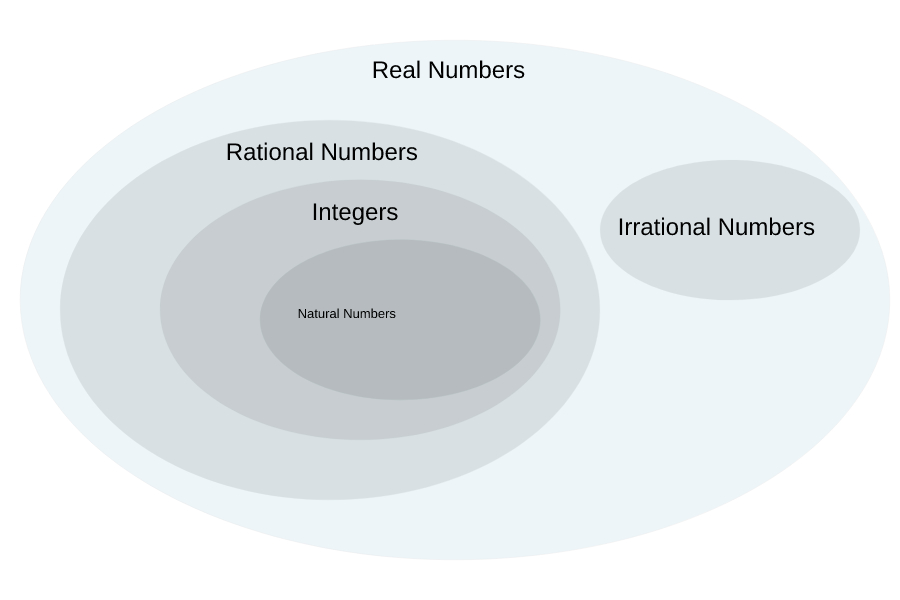
According to a popular 2017 review by famous researchers Robert Siegler and David Braithwaite there are certain deep-rooted and fundamental cultural differences and curricular exigencies that make learning arithmetic difficult for learners from one country to another. Cross-culturally, problems in math learning arise especially during the phase when learning properties of whole numbers are extended to include all other types of numbers. Two particular concepts; (1) Numerical magnitudes and (2) Rational number arithmetic, and how well teachers understand and teach these are critical to our own mastery of numbers. This is regardless of how intelligent we are and irrespective of our linguistic or mathematical ability. The present post is an attempt to elucidate these findings.
The average child between three and five years has no difficulty in picking up numbers from zero to ten, which extends to 100 by seven years and beyond 1000 by twelve years. Fractions between 0 and 1 are picked up around eight years of age, while all other fractions are learnt post eleven years of age
By Damien Karras (Own work), via Wikimedia Commons
(1) Numerical magnitude understanding means the ability to comprehend, gauge (order) and compare the sizes of numbers (whole numbers as well as fractions). Such representations form the basics of math learning and are applicable in real-life. Known as the Weber-Fechner law of perception, mastery over numerical magnitudes gets generalized into real life situations where discrimination between two numbers becomes increasingly difficult as the difference between them decreases. The “distance effect” as it is called is seen when for instance, one is shopping around for discounts. While one might travel up and down a department store to get a large percentage discount on small items, one won’t make a similar effort on very large purchases where smaller percentage discounts are offered. In short, one fails to compare the absolute rupee amount saved when comparing the aforementioned two cases.(2) Rational number arithmetic comprises ratios of numbers expressed as fractions. Whereas neuroscience data from several experiments locate similar areas of the brain where processing of fraction and whole number magnitudes takes place, there are problems that arise during the learning process when properties of whole numbers are generalized to all other types of numbers.
In order to demonstrate this idea we present a few problems.
(1) In contrast to whole numbers that are represented with one single symbols (such as “2” for two), fractions can be represented in several different ways (1/2 or 2/4 or 3/6).
(2) When one multiplies natural numbers like 2 x 3, the product is always larger than either 2 or 3, this is not the case however when you multiply numbers between 0 and 1 (1/2 x 1/2 = 1/4).
(3) Similarly if you add whole numbers (0 + 2 = 2), the resulting number is never smaller than either addend, however this is not the case while adding negatives.
Lewis Carroll, via Wikimedia Commons
“And as in uffish thought he stood,
The Jabberwock, with eyes of flame,
Came whiffling through the tulgey wood,
And burbled as it came!”
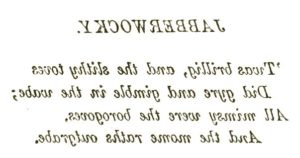
Rational number arithmetic is something that is hoisted upon unsuspecting 8 year olds, who see it as one does the nonsensical poem Jabberwocky by Lewis Caroll. Teachers must decode both the logic and language of this math through a process of guided discovery and play, but above-all encouragement for their students. To those students who, like me, have unfortunately endured unkind or obnoxious math teachers at some junction, I leave you with a continuation of part of a quote by Chef.Auguste Gusteau from Pixars animation Ratatouille,
“You must be imaginative, strong-hearted. You must try things that may not work, and you must not let anyone define your limits”
In todays day and age of information dissemination via the internet, the sky is literally the limit.

Srinivasa Ramanujan via Wikipedia Commons
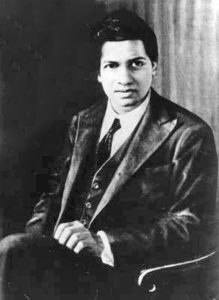
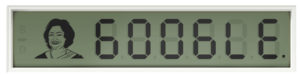
My father, a south-Indian from a traditional Coimbatore home, was passionate about numbers and my childhood was spent listening to stories of very particular hero’s; No, not Wonder woman – He told me about Srinivasa Ramanujan who he said, finished a three hour math exam in thirty minutes and came up with multiple solutions to a particular problem, some of which stumped his teachers. His mother was a housewife and father was a clerk in a sari shop. Another hero in my father’s world was Shakuntala Devi. He had once seen her calculate up to the 20th square root of a 200 digit number within minutes. Her father worked in a circus as a trapeze artist.
This brings us to the moot question – “Are hero’s born or bred and could there actually exist this dichotomy of mathkind and the others?”
Google doodle of Shakuntala Devi via Vanderelbe.de under the CC license
Much before a child starts formally learning mathematics, she has some conceptual understanding of numeracy. This preschool “number sense” includes knowing the difference between more and less, big and small. Children are also introduced to the vocabulary of mathematics that derives from Latin and Classical Greek, eventually including, interpretation of signs, symbols, syntax and semantics. Sir Micheal Rutter who has written extensively on the field of behavioral genetics claims that genes operate through the environment and hence function in probabilistic not deterministic ways.
So, even if in the remote future they find a gene for mathematics, one cannot discount the role of the pedagogue and how math is taught. This underlines the quality of classrooms math instruction and teacher expectations of student performance, especially of those students that I previously labeled “the others.” It is a well documented fact that several math educators, either when not rigorous in their own understanding, or when unable to communicate technique, depend solely on rote memorization to teach children in classrooms. Furthermore, textbooks and teachers do not demonstrate contrasting explanations to a particular question, so that when rules have to be expanded or generalized across all types of numbers (whole to rational, for instance), children get confused or resist. As a result, math anxiety develops amongst those who are already averse to the subject. When teachers expect some students to perform worse than others, studies show that indeed, they do. It becomes a self-fulfilling prophecy.
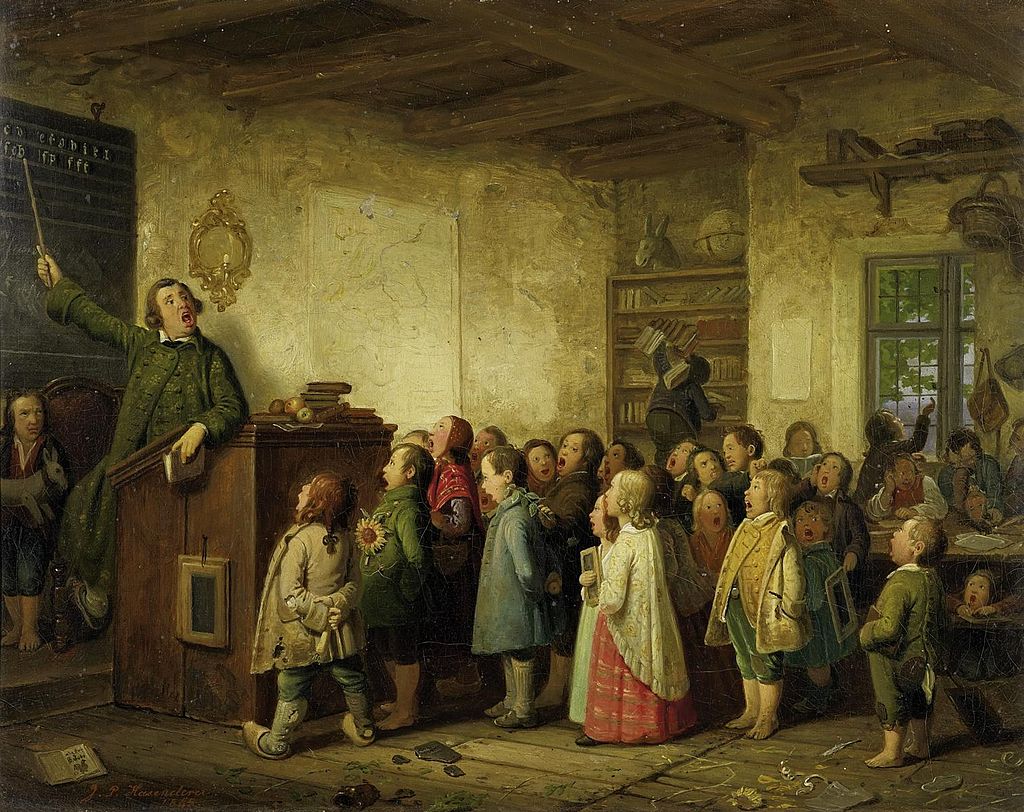
Johann Peter Hasenclever, via Wikimedia Commons
Canadian, Dr. John Mighton, is an educator whose focus is on math instruction and the need to replace mathematical anxiety with a mathematical appetite. His not-for-profit organization “JUMP Math” addresses the aforementioned issues and believes in the premise that anyone can learn math and anyone can teach it. Montessori education too, very early on, emphases the need to teach children, the relation of numerical symbols to beautiful concrete real-life things, in classrooms but especially out of the classroom and for instance, in nature.
Much like Chef. Gusteau from Pixars animation Ratatouille who believed that “tout le monde peut cuisiner” or “Anyone can cook”, mathematics is a universal language that is important for survival. It is the responsibility of educators to make learning it pleasurable and accessible to all.

When a couple chooses to be emotionally and sexually exclusive to one another, a violation of this arrangement by one or both partners amounts to infidelity. This includes not just penile/vaginal intercourse, oral sex or anal sex but may also include a partner engaging in nonsexual behaviors such as sharing intimate feelings, thoughts and time in secrecy with an extramarital same or opposite sex partner. More recently, this definition has included internet infidelity as well.

Photo by Kaitlyn Baker on Unsplash
An open marriage involves a willingness by both partners of a couple to engage in sexual relationships outside of their primary relationship with each other. There is a great deal of honesty of both partners about their outside relationships. A swinger lifestyle is one were couples jointly share partners with other couples, or in groups, solely for sexual purposes. Polyamorous relationships involve sexual and emotional involvement with more than one partner and is more often seen among a few members of the LGBTQ community. There is comparatively very little research done in this last category.
Yes, Absolutely! The key phrase here is ‘open communication’ – If both partners in a couple have clear and considerate conversations about sharing a relationship with a partner outside of their primary relationship and if there is no ambiguity between them about what represents infidelity or constitutes an affair, then this can work.
When a partner witnesses or stumbles upon evidence of a relationship outside of the primary one and when such a relationship is unacceptable, then it may constitute a crisis for both partners especially if it stays unresolved. In some cases, when partners indulge in behaviours that are either one-sided or not fully thought-through, it can lead to a downward spiral in the partnership or marriage.
To begin with it is established if the couple wishes to salvage the relationship, to clarify the future of the relationship and the affair or is determined to end the relationship under the best possible terms, especially if there are children involved.
1. Partners must both agree on appropriate emotional, social, and sexual boundaries with others
2. Vexed partner must be keen on and able to forgive in order to rebuild the relationship. If this is not possible, then the goal for therapy should be a dignified separation.
3. The next step is for the partners to demonstrate a commitment in reconstructing the relationship. This is hard work and needs time along with the inclination.
4. There is an agreement on concrete and specific values that are to be exercised in the reconstructed relationship. Rebuilding of trust begins here.
5. If this attempt does not succeed, clients work on agreeing to separate respectfully. It is important to gain and understanding into what led to the breaking of the commitment to faithfulness, so as to gain closure.
Hertlein, K. M., Wetchler, J. L., & Piercy, F. P. (2005). Infidelity: An Overview. Journal of Couple & Relationship Therapy, 4 (2-3), 5-16.
O’Leary, K. D., Heyman, R. E., & Jongsma Jr, A. E. (2015). The Couples Psychotherapy Treatment Planner, with DSM-5 Updates. John Wiley & Sons.
Stefano, D., & Oala, M. (2008) . “Extramarital affairs: Basic considerations and essential tasks in clinical work.” The Family Journal, 16 (1), 13-19.

I’m just one stomach flu away from my goal weight.”
– Andrea, The Devil Wears Prada
Research has shown that the bodies of Playboy centrefold’s became increasingly thinner between 1959 and 1978, a trend that continued until ‘88, levelled off around the 80’s, and then slightly reversed between 2000 and 2014. More recently, advocacy by large corporations such as Unilever, and legislation banning underweight models in France, have made small moves toward countering the trend toward thinness.
But “fat panic” continues. “Obesity is the terror within,” decried America’s Surgeon General, Richard Carmona “Unless we do something about it,” he continued, “the magnitude of the dilemma will dwarf 9/11 or any other terrorist attempt.” Just imagine the Surgeon General’s words cast in metal type, the kind used in a printing press. Now imagine this type being pressed into your memory. This is how stereotypes work. And stereotypes about obesity have been at work for a long time. Professor Elena Levy-Navarro’s book demonstrates that, as long ago as the 16th century, physical attributes gradually became discriminatory in some cultures. Such attributions are plain wrong, scientifically and aesthetically. When popular discourses focus on the morality of our body frames, they devalue everything else that makes us beautiful and that gives meaning to our lives. Obsession with our shape and weight distracts from things that are much more important to a healthy life: love, play, work, nutritional soundness. There is a whole branch of psychology dedicated to conducting research with this goal.
As part of a natural experiment, be observant the next time you pass by a rural Indian village or in your own home. The vibrant women (and men), especially those working non-stop in the field, in a factory or as house-help come in all moulds. If under-nutrition is a big problem amongst the Indian lower classes, by popular reasoning they should burn more calories than they consume. It therefore follows, that they should all tout ‘to-die-for’ figures. That obviously isn’t the case. You see heterogeneity before you. This mix does not reflect how healthy or happy these individuals are.
Cultivate the need to primarily understand and unconditionally accept the root cause of your suffering. A mirror does not reflect who you are. How attractive you feel is not measured by that number you see on your weighing scale. You can be sexually formidable and live fully and meaningfully irrespective of your body-frame.

Hercules And the Beautiful Omphale by François Boucher via Wikipedia Commons
1. Tell yourself that there is no wrong way to have a body. Your size does not measure your beauty or your worth. If people judge you morally using your body weight or type, this is “body shaming.” It is usually followed up by well-meaning (but unsolicited) advice on your diet, weight and lifestyle.
2. Overemphasis on and dissatisfaction with your physical features can lead to feelings of sadness, inadequacy, low self-worth and unattractiveness. If you feel this way often, get in touch with your psychologist. He/she may be able to help you.
3. A body image is an emotional image that you have of you weight and shape – It is the thoughts that accompany how you “feel” you look. It is the behaviors (and neuroticism) that accompanies your beliefs about your body weight and shape. Oftentimes it has little to do with your actual weight and shape.
4. Ask your psychologist about “Acceptance and Commitment Therapy” (ACT) – a form behavioral therapy that is known to be effective and evidence based in helping you feel better about your body shape and frame

For that was the terrible power of the dementors: to force their victims to relive the worst memories of their lives, and drown, powerless, in their own despair…
– J.K. Rowling, Harry Potter and the Goblet of Fire

Edmund Husserl Image under the CC license By Arturo Espinosa
Edmund Husserl, a German philosopher established the field of phenomenology, the science of how things are experienced subjectively by us. In his opinion, we can better resonate with someone else especially when we share a context with them. Suffering from depression, it appears, feels as though nobody shares your world, your context, and you are all alone. You feel otherworldly, empty, heavy and in pain. There is no hope. Your life circumstances are not so bad, (although they might be in other cases). You look like the alien. People don’t get you. They ask you to just “snap out of it.” You think to yourself, if that were the case, why would I “snap into it” to begin with. They just don’t get it. That you are so stuck. There seems no way out. You feel like nobody can help you. If you suffer from depression, be assured that what you feel is real, it is authentic. Time has probably, indeed slowed down for you.

Under the CC license from the National Archives Archeological Site , via Wikimedia Commons
Normal sadness is not the same as sadness in clinical depression. Researchers Horwitz and Wakefield (2007) point out 3 differences between these two types. They say that normal sadness is context-specific. It is proportionately intense to the provoking loss and most important, it resolves when the loss ends. Brown and Harris (1978) write on the Social Origins of Depression and identify how stressors, protective and risk factors contribute to the illness. Recent research emphasizes how you could have everything going for you, and yet be clinically depressed. You could be an infant, a child, an adolescent, an adult, or elderly person, male or female and suffer from depression. Depression can also co-occur with chronic illnesses, cardiovascular diseases, post-pregnancy and during menopause.
1. Tell someone. Get them to get an appointment with a psychiatrist that they think you will most likely get along with both ideologically, and whom they consider medically sound. Give it 2 months.
2. Start psychotherapy after 2 months to build your resilience.
3. Until then, getting through the day is all you need to do, treat yourself like a person with a disability. Don’t set goals so high that you set yourself up for disappointment. Brushing your teeth, eating, bathing should be your goals. 3. After the depression lifts, cognitive behavioral therapy works via various mechanisms. Primarily, we work on small behavioral (not emotional) goals. Baby steps.
4. Next we work on early experiences that contribute to the formation of your belief systems. An example of a belief system, ‘Ghosts are real’. If you believe so, your behavior will reflect this belief. You will feel anxious if you are faced with certain triggers. This will not apply to someone who believes that ‘Ghosts don’t exist’
5. Next, we work on your triggers, your assumptions, your negative thoughts, your attributions, your avoidance behaviours and your emotions. In this manner, cognitive behavioral therapy helps you while recovering from a major episode but also afterward, when you are trying to build your resilience.

“The genetics load the gun, personality and psychology aim it, and experiences pull the trigger, typically.”
– Jim Clemente (FBI profiler) said of the 2017 Las Vegas (USA) massacre that left 58 people dead and 851 injured.
There are various views amongst psychologists to explain deviances in human behaviour and aggression, but we are far from a consensus. One view maintains that a terrorist either has antisocial personality disorder or is a psychopath. This means that he either shows a chronic pattern of behavior that violates social norms (such as stealing or cheating) or has a personality disposition that is marked by a core emotional and information processing deficit with a tendency to ignore environmental cues such as danger or punishment. He lacks remorse or empathy and is impulsive. Many researchers are of the opinion that childhood neglect, physical abuse, psychological abuse or extreme unfair disadvantage are involved in driving unstable personalities to eventually commit crimes. Unfortunately, however, research has also shown that there are no specific familial, educational, or socioeconomic factors that can explain something like religious radicalization that leads to suicide terrorism.
In his book, “The Lucifer Effect: Understanding How Good People Turn Evil,” Social Psychologist Dr.Philip Zimbardo warns that ‘good’ people such as yourself, can be made to do contemptible things by systematically manipulating your belief systems over time. Changes can be brought about in your personality and behavior that you didn’t know were possible.
Under the CC license By Sailko – Own work
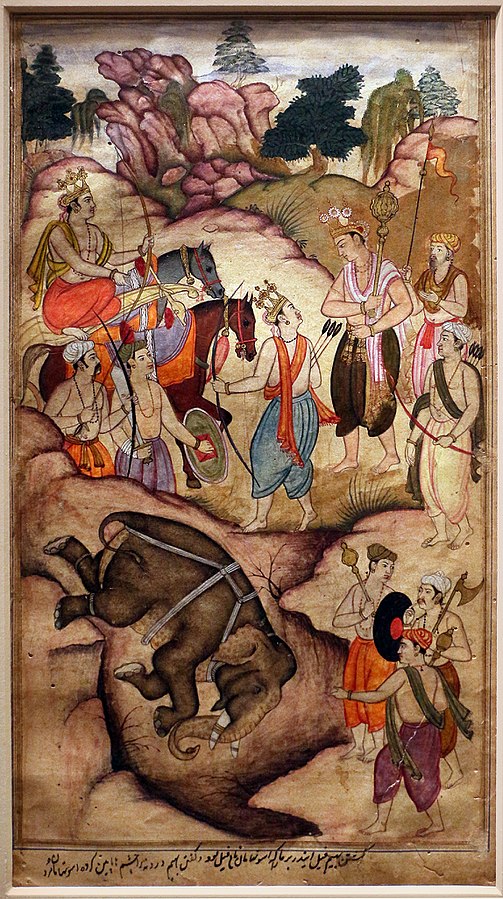
The Mahabharata an ancient Hindu-Indian epic on war, similarly reveals plots and sub-plots that focus not just on genetics and personality, but also on circumstances that motivate action. In short, it blurs the line between good and evil. In one interpretation Devdutt Pattnaik who writes on the relevance of mythology in modern times, alludes to the war at Kuru-kshetra between the two clans, the Pandavas and Kauravas, as a war about Dharma, which he equals to human potential and not blind faith. He clarifies that Dharma is about gaining better control of ourselves, and hence such a war has no losers. Within the sub-plots of the larger story occur instances of actions that are motivated by a need for justice. Revenge and the need for retribution leads to rationales that, in our mind, justify our actions. One man’s terrorist becomes another’s freedom fighter. In such a struggle, each opponent believes that they are right and the other is wrong. Charismatic leaders are known to kindle the humiliation and insult that elicits destructive impulses in their subjects, as has been seen several times in human history, and that we are presently witnessing in the world.

Photo by Sarah Ball on Unsplash
Whereas we know that human beings are aggressors by nature, science has also established that we have the capacity for emotional modulation or self-regulation. One (of many) such mechanisms is via the Buddhist practice of mindfulness which we know enhances cognitive control. This practice is known to help one establish a receptive awareness of inner and outer experiences, temporarily leaving out analysis and evaluation of one’s current situation. The practice neither focuses on the past nor the future. Outcomes include better attention and decision-making capacity. In psychotherapy, a similar approach is used to gain insights into emotional disturbances and help move toward a state of well being. Dr. Adele Diamond, listed as one of the 15 most influential neuroscientists in the world, works in the area of early development of cognitive control, and emphasizes the role of play, dance and music in early life. Although one cannot discount the role of genetics and personality, there is a shift in focus of psychological sciences toward building resilience and cultivating experiences of love, work and play.

“Silly Caucasian girl likes to play with Samurai swords”
– O-Ren Ishii, from Kill Bill I
So what if N hit T last week? She must’ve done something to provoke him. I know T from birth. She has many flaws. She is not as innocent as she wants you to believe (Woh bhi koi doodh ki dhuli nahin hai). Besides, she has never earned a single penny in life. She doesn’t know what it means to live alone, let alone to live in a conservative Indian neighborhood where people will point fingers at her, ” said the concerned and loving father of 40 year old T, a housewife from a very privileged background who moved in high society social circles, and who initially came to me for clinical depression.

Photo by Sydney Sims on Unsplash
Firstly, let there be no doubt in your mind that the evidence is robust when it comes to witnessing intimate partner violence for all the victims concerned (wife and kids).Sensitive children who live with it are likely to be emotionally incompetent wrecks, and it doesn’t matter whether they are European, American or Indian. There is no Indian superhero gene that protects our kids any more than anyone else. Kids, however tend to imitate easily. So dear father, please remember that you shape your childs’ ability to be emotionally stable and competent, qualities that are fundamental to being healthy adults. And, dear Indian father-of-the-bride, India in 2017 does not have the same gender structural inequalities and patriarchal cultural norms that it did in 1917. The daughter that you held in your arms as a baby, has been physically abused. Limiting her access to emotional (love), economic (family support) and legal resources, is not saving her family. For whatever reason, if a spouse has raised his hand, he is a batterer. Call him that. Your daughter is a victim who has experienced humiliation, a decreased sense of power and uncertainty about the next flare up. She needs to be empowered, regain her confidence and self-worth and heal. There is no question, you need to be by her side, whatever the origin of the conflict.
1. Safety first. In June, 2017, 44 countries signed the “Convention on preventing and combating violence against women and domestic violence” that highlighted the four P’s: Prevention, Protection and Support of Victims, Prosecution of Offenders, and Integrating Policies. Know the law in your country.
2. Get into therapy with a qualified therapist, both individual and couples therapy. Anger management, impulse-control therapy for helping you to communicate peacefully and medication where required.
3. Feeling unfairly persecuted. “I hit her because she provoked me”
Dear husband, are you justifying your battering behavior? Are you rationalizing pounding your partner? Are you trying to enforce behaviors at home by assaulting your spouse? Are you trying to solve problems by thrashing her? You have a problem. You have violent outburst. You need to see a doctor, a psychiatrist, a therapist or all three and unlearn your behaviors. First of all, own up to your problem and get treated. Your problem as a couple comes next. Getting treated for your impulse control is not a guarantee that your relationship will work out, but it is a shot that is good for your own health.
4. Drug misuse/abuse: If this is the case, rehabilitation is what you need. Until then, the family needs distance and protection from you (the spouse)
5. For you, dear victim. Make it your purpose to secure yourself, your body, your mind. Don’t take any hasty decisions, but don’t let fear, your parent or your spouse dominate your choices for your chance at safety and security.